
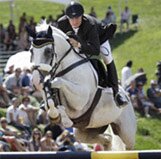
Dressage
 Dressage is one of three Olympic Equestrian disciplines and requires a high level of horse training.
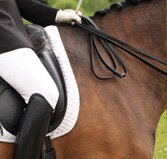
In this competition, horse and rider must move in harmony. Through subtle natural aids, a little like telepathy, the rider asks the horse to perform specific movements.
The Dressage Test consists of a series of predetermined figures (volte, serpentine, figure of eight) which the duo must perform on a flat rectangular arena skirted with a low rail, on which 12 letters indicate where to begin and end the movements as well as where to change pace or lead. All competitors in a test execute the same routine. At beginner and lower levels only, the rider may sometimes use the assistance of a prompter who will read the instructions aloud to the rider facing the judges.
Dressage scoring is a percentage: five judges allot a mark, between 0 and 10, to each competitor, which once tallied produce the final score. The winner is the rider or team with the highest percentage. A result over 70% indicates a good execution of the Test.
Freestyle tests performed to music, or Kur tests, are the most popular Dressage events. In those events, the rider chooses his own music and presentation, but must also include certain mandatory movements.


| « Oct | Dec » |

| S | M | T | W | T | F | S |
|---|---|---|---|---|---|---|
| 1 | 2 | 3 | 4 | 5 | ||
| 6 | 7 | 8 | 9 | 10 | 11 | 12 |
| 13 | 14 | 15 | 16 | 17 | 18 | 19 |
| 20 | 21 | 22 | 23 | 24 | 25 | 26 |
| 27 | 28 | 29 | 30 | EC | ||


